Cargo Security in Road Freight

Cargo theft in Europe is at an all-time high, and the latest wave is not opportunistic — it is organised and increasingly digital. For shippers of high-value goods, a single GPS feed on the tractor unit no longer tells you whether your load is safe. A modern security posture layers multiple tracking devices per shipment, geofences that know where a truck should and should not be, door sensors on the trailer, and a VIN-based digital twin of the actual vehicle doing the work. Every one of those layers is a vehicle-integration problem — and that is where a real-time visibility platform earns its keep.
A 12-tonne wake-up call
At the end of March 2026, a truck left a Nestlé factory in central Italy carrying 413,793 KitKat bars — the Formula 1-branded range launched for the 2026 season — on a routine run to Poland. The truck never arrived. Twelve tonnes of chocolate, and the vehicle carrying it, have not been publicly recovered.
The KitKat story went viral, but the underlying pattern is not funny. TAPA EMEA — the industry body that tracks cargo crime in Europe, the Middle East and Africa — logged 557 cargo-crime incidents in December 2025 alone, with a single month’s losses topping €43 million. In the first weeks of 2026, two trucks carrying €4 million of electronics were attacked on a French motorway in what investigators described as a “paramilitary” operation, with drivers cornered by more than a dozen masked men armed with axes. In Germany, a full truckload disappears on average every three days.
For shippers, the operational picture has changed. Cargo crime in 2026 is dominated by curtain-slashing and lock-breaking during transit and rest stops (around two-thirds of all incidents), followed by a sharp rise in phantom-carrier fraud — criminals posing as legitimate hauliers, sometimes using cloned plates and falsified paperwork, collecting the load at origin and then disappearing. Germany alone logged 88 phantom-carrier cases in the first seven months of 2025 — as many as in the whole of 2024 — with the average loss per case climbing from roughly €130,000 to nearly €200,000.
You cannot solve this with a single tracking device on a single truck. You solve it with layered data from every device already on the vehicle, correlated in one place, with alerting you can act on.
Layer 1 — Multiple GPS sources per load, cross-checked in real time
Today, one GPS tracker per truck is the standard. For high-value goods, however, it should be the minimum.
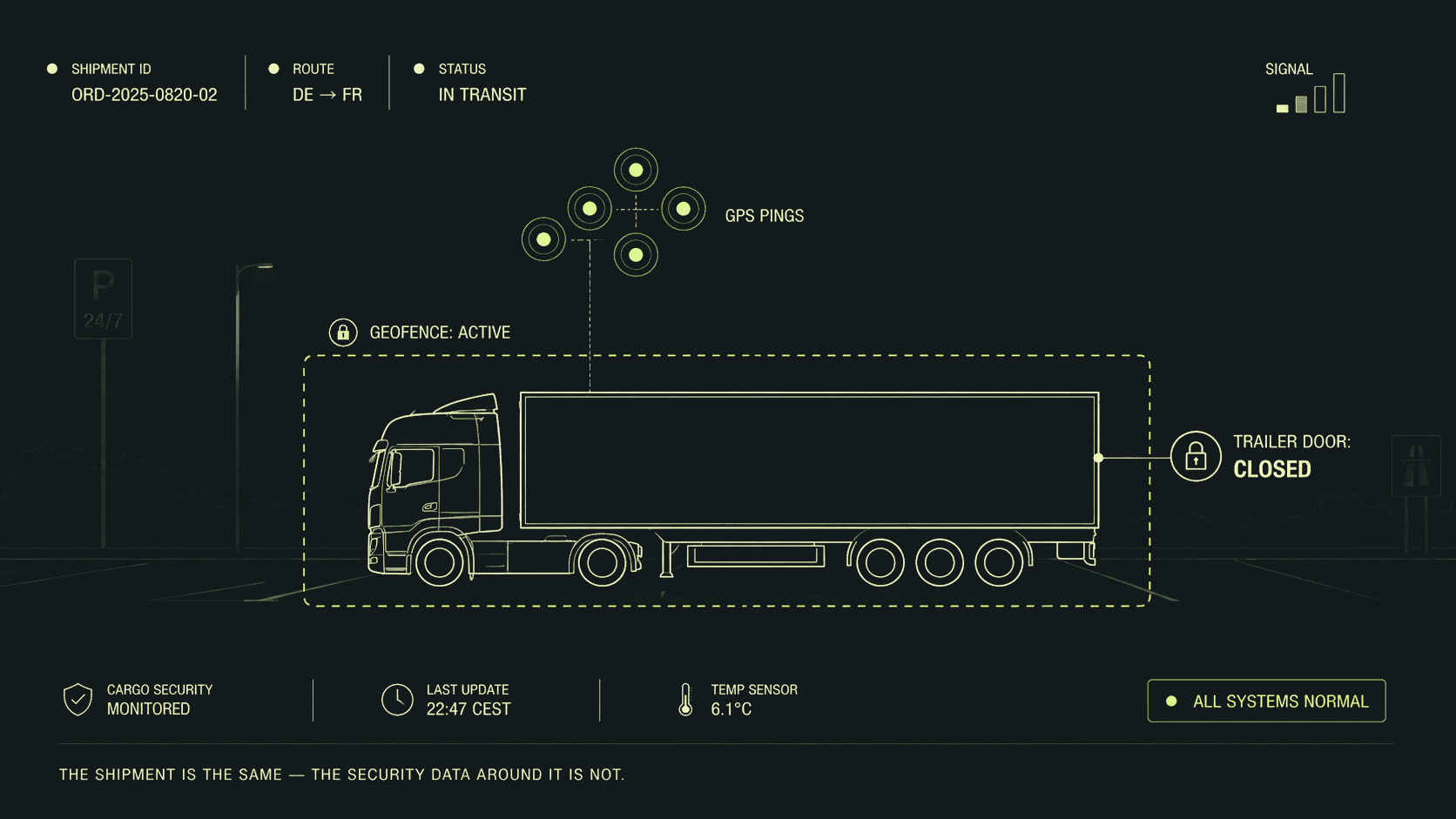
A modern security posture treats the tractor, the trailer and any dedicated cargo telematics device as three independent witnesses to the same journey. If all three agree on location, you have high confidence. If the trailer and cargo device agree but the tractor’s position is suddenly different — or, more often, stops transmitting entirely — something has happened that the shipper needs to know about before the driver’s next scheduled check-in.
This only works if the visibility platform can ingest and reconcile feeds from every device on the shipment, regardless of who made them. In practice that means truck OEM feeds (Volvo, Scania, DAF, Mercedes, MAN, Renault, Iveco, Ford), trailer OEM feeds (Schmitz, Krone, Kögel, SDC), third-party telematics (Webfleet, Transics, Astrata, Continental VDO, Frotcom, Geotab, and so on), and any dedicated cargo IoT device the shipper has attached. An aggregation layer with 485 live integrations, covering 95% of the EU fleet across 37 countries, is not a vanity metric — it is what makes cross-checking actually possible across a multi-vendor European fleet and its subcontractors.
The practical benefit: device-level redundancy. If one feed is jammed, spoofed, or simply goes offline, the other two keep reporting.
And the redundancy goes deeper than three separate devices. Because CO3 connects directly to the OEM data stream, a single vehicle simultaneously exposes multiple independent telemetry channels — GPS position, ignition state, wheel-based speed, drive state, engine-on time, fuel flow. Each is a separate signal on the CAN bus. A GPS jammer — now a commodity on some motorway service areas — can silence the position feed. It cannot silence the rest. The wheels keep turning, the engine keeps running, the ignition stays on, and all of that keeps arriving at the platform. “Going dark” on GPS while every other signal says the truck is moving is itself a loud, detectable event — exactly the pattern a control tower can escalate in real time. This was one of the clearest takeaways from TAPA’s most recent security event: the best defence against a single-point-of-failure attack is a feed that never had a single point of failure to begin with.
Layer 2 — Geofencing for route deviations, unsafe parking, and zoning rules
The second layer is about where the truck is — measured against where it should be.
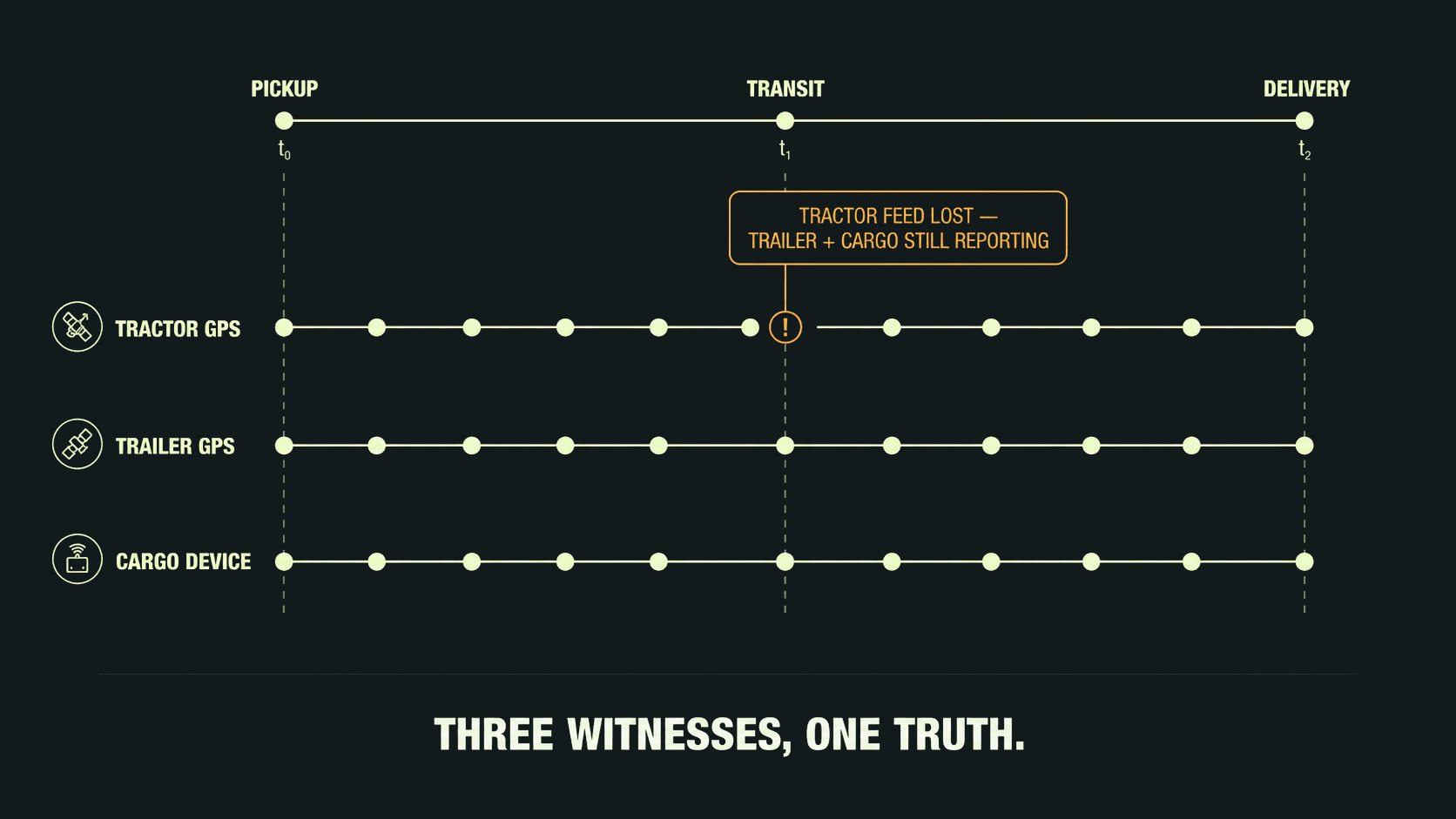
A geofence is simply a digital boundary on a map. A visibility platform turns this into three practical controls a shipper can enforce without installing any new hardware:
- Route-corridor geofences. Define an acceptable corridor around the planned route. If the vehicle leaves that corridor by more than a configurable threshold, the control tower is alerted in seconds — not when the driver fails to arrive. CO3 surfaces this today as “immediate exception alerts” that instantly detect route deviations, delays and disruptions. It directly addresses the “phantom carrier” scenario, where the load is picked up by a legitimate-looking truck and then quietly redirected.
- Unsafe-parking alerts. Europe has around 300,000 truck parking places but fewer than 7,000 are certified as safe and secure under TAPA’s Parking Security Requirements — under 3% of the total. If a driver with a high-value load parks anywhere outside a pre-approved list of secure sites (TAPA PSR-certified, DEKRA-rated, or a shipper-approved customer facility), the visibility platform should flag it the moment the truck stops. Curtain-slashing happens at unsecured truck stops. Eliminating unsecured parking for high-risk loads is the single biggest operational lever a shipper has.
- Zoning and restricted-area alerts. Some cargo is not allowed into certain regions or cities (dangerous goods zoning, customs-bonded areas, low-emission zones, or — for very high-value cargo — specific theft-hotspot regions). A geofence converts these business rules into automatic alerts.
The catch: geofencing only works if the underlying GPS signal is reliable. Which is why Layer 2 cannot exist without Layer 1.
Layer 3 — Trailer-door sensors: the fastest signal of a theft in progress
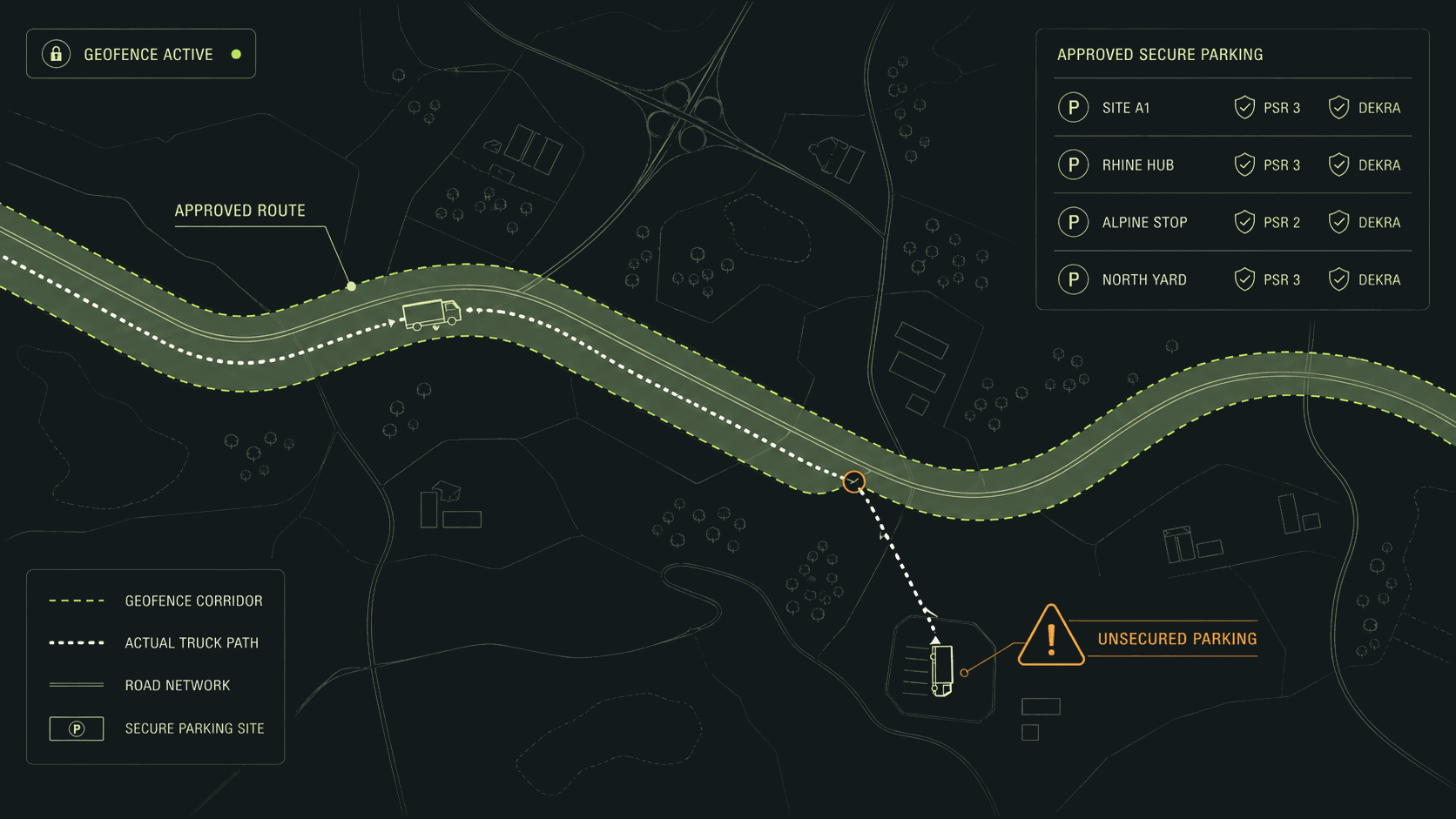
GPS tells you where the truck is. A door-opening sensor on the trailer tells you whether the load is still closed. For high-value cargo, that second signal is often the first indication that something has gone wrong.
Most modern trailers from the major European manufacturers expose door-status events as part of their telematics feed. An EBS (electronic braking system) data stream also frequently carries door-open / door-closed signals, and plenty of third-party trailer telematics providers expose the same event.
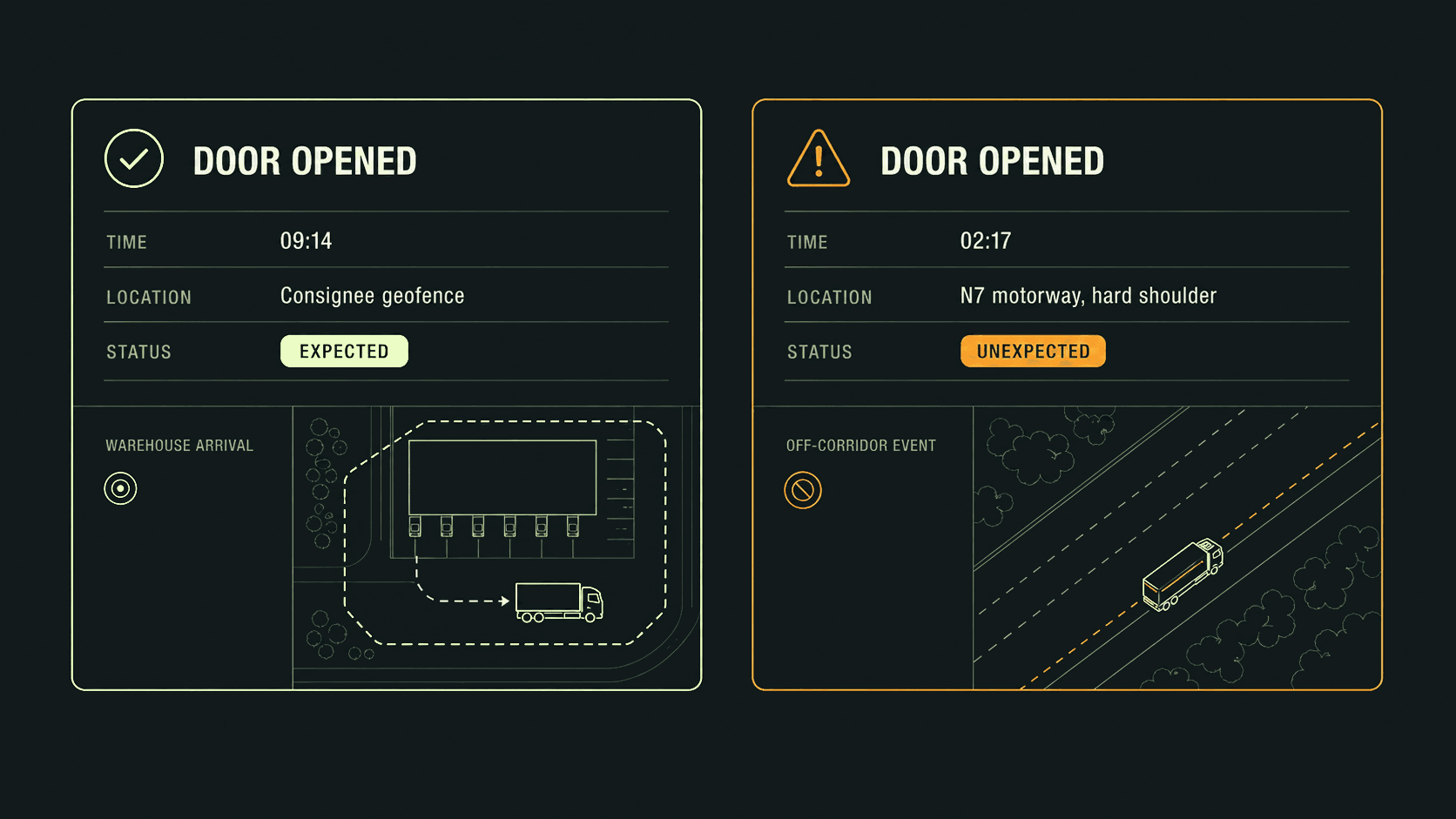
The useful version of this data is not “alert me every time a door opens”. It is “alert me when a door opens somewhere that isn’t a planned loading or unloading point”. Combined with a geofence around each approved stop, the platform can distinguish between a legitimate unload at the consignee and a door opening on a motorway hard-shoulder at 02:17. The first is noise. The second is the signal that starts the phone call.
This is another feature that falls apart without clean integrations. If the platform cannot read trailer door events from your trailer manufacturer’s telematics, or from the EBS feed, the signal never arrives.
Layer 4 — VIN-based digital twin: defending against plate fraud and vehicle substitution by phantom carriers
The fourth layer is the most subtle and, for shippers dealing with phantom-carrier fraud, the most important.
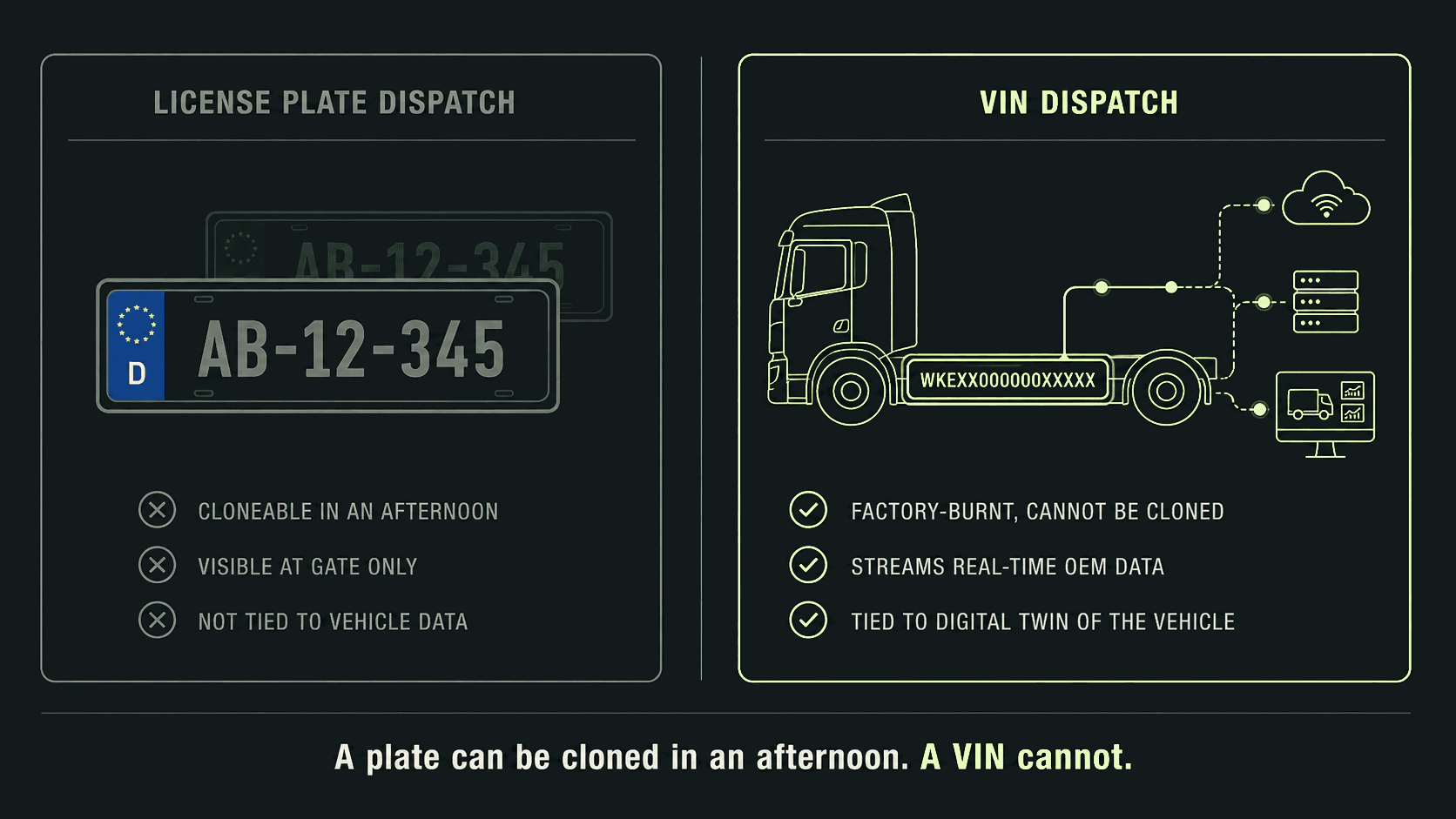
A licence plate can be cloned in an afternoon. Paperwork can be forged. A fraudulent haulier can show up at the loading bay with a truck whose plates match the ones on your transport order — and drive off with your cargo, never to be seen again. In many high-profile 2025 cases, the “carrier” had a legitimate-looking web presence and a clean plate. It often impersonated existing companies with decade-long reputation and relationships. The fraud was invisible to anyone checking only what the driver handed over at the gate.
A VIN (Vehicle Identification Number) cannot be cloned in the same way. It is burnt into the vehicle at the factory and is the unique identity the OEM’s own telematics uses to stream data — fuel, position, engine diagnostics, odometer, door status. When a visibility platform integrates directly with the OEM via VIN rather than via a plate or a manually entered fleet ID, the shipper gets something stronger than a tracking feed: a digital twin of the actual vehicle doing the work.
What that looks like in practice:
• At order creation, the shipper (or the carrier, via the platform) nominates the VIN that will run the load.
• The platform pulls the OEM feed for that VIN from the moment the order is dispatched.
• If the truck that arrives at the loading bay has a different VIN than the one on the order — even if the plate matches — the system knows. The fraudulent swap is visible before the doors open.
• Throughout the journey, every data point (position, fuel burn, engine-on time, door events) is tied to that specific VIN, not to a plate that could have been changed between stops.
The technology to do this is already in the field. OEM telematics across the major European truck makers expose VIN-keyed data via API. The hard part is not the truck — it is aggregating all of those OEM feeds into one place, under one account, so a shipper can enforce a VIN-based dispatch rule across a network of dozens of carriers and thousands of vehicles. That is the integration problem a real-time visibility platform is built to solve.
When prevention fails: audit-ready proof for insurance, incident reports and compliance
Even the best security stack will, occasionally, be beaten. When it is, the next few hours matter enormously — to the insurance claim, to the police report, to the customer conversation, and in some cases to the regulatory filing that follows. A visibility platform earns its keep a second time here: not by flagging the incident, but by having already captured the underlying proof data the moment it occurred.
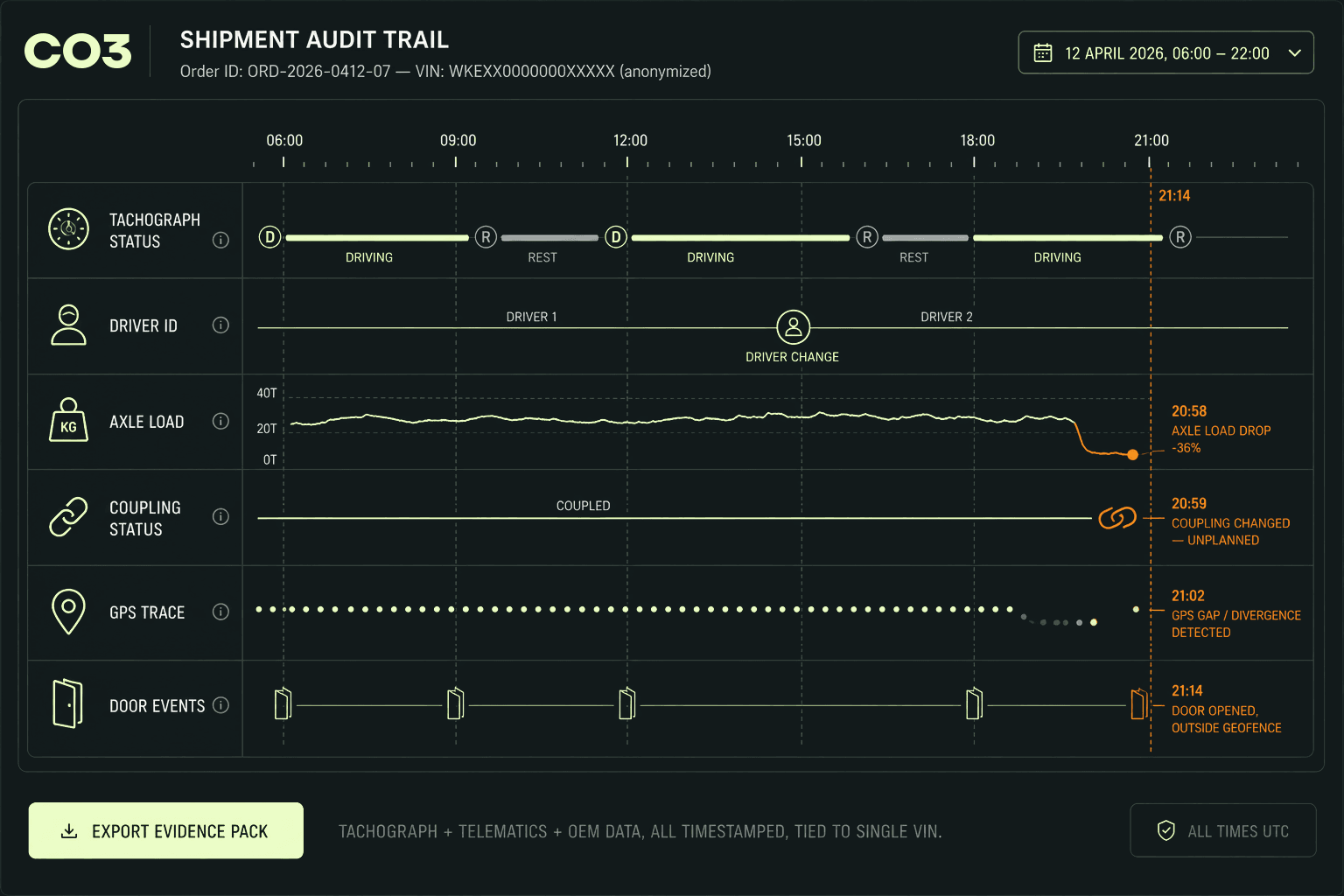
CO3 does not just raise the alert. It retains the evidence. For every leg, that means tachograph activity, driver ID, axle-load readings, trailer coupling status, GPS trace, door events, fuel burn and engine state — all time-stamped, tied to the specific VIN, and exportable. The shipper who can hand an insurer a complete, machine-readable log of the shipment from pickup to theft event — including the exact moment the coupling changed, the exact kilometre the route deviated, and the exact second the door opened — closes a claim in weeks rather than months. The one who hands them a screenshot and an email summary does not.
Audit-ready proof is also a compliance asset. Phantom-carrier fraud often lands in the middle of a regulatory investigation; dangerous-good incidents trigger mandatory reporting; high-value losses can draw Mobility Package and eCMR questions. A complete, integration-sourced audit trail across tachograph, driver, vehicle and trailer is the difference between a defensible posture and a reconstructive scramble through five different systems.
A six-question security audit for shippers
- If you are shipping high-value cargo in Europe in 2026, these six questions separate a platform that gives you visibility from one that gives you security.
- Can my visibility platform show me at least two independent GPS feeds — tractor and trailer, at minimum — for every high-value shipment, side by side?
- Can I set a route corridor and an approved-parking list and be alerted automatically when the truck leaves the corridor or parks anywhere unapproved?
- Does the platform receive door-open / door-closed events from the trailer or the EBS, and can it distinguish between expected and unexpected openings?
- Can I dispatch a shipment against a specific VIN — not just a plate or a fleet ID — and be alerted if a different vehicle arrives for loading?
- Does the same platform work across my subcontractors’ fleets, not just my own — so a mixed network gets the same security controls end-to-end?
- If something does go wrong, can the platform hand me a complete, time-stamped audit trail — tachograph, driver ID, axle load, coupling status, GPS trace, door events — without my team having to chase it down across five different systems?
A “no” to any of these is not a technical gap. It is a commercial and reputational one. The next KitKat is already on the road.
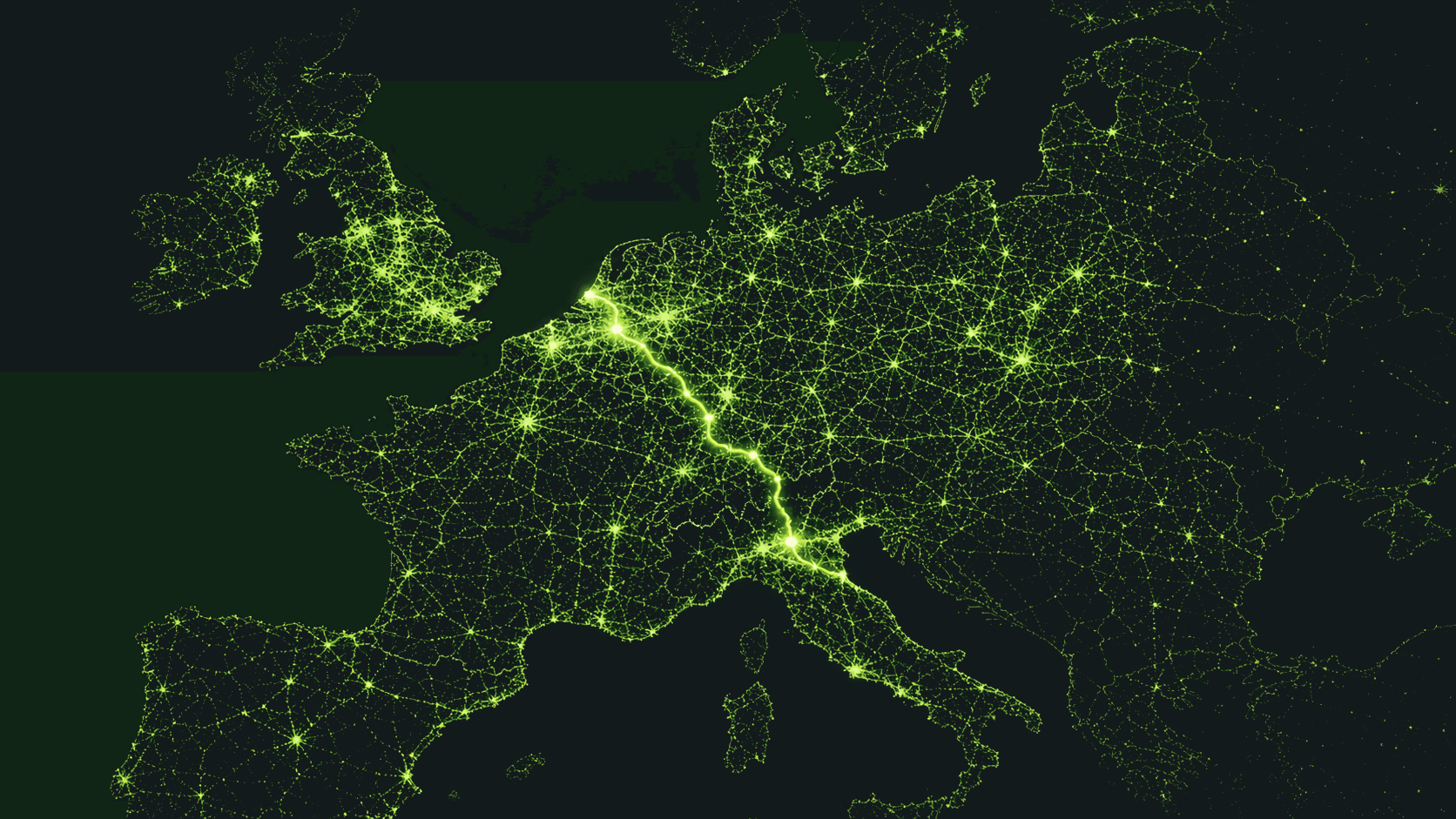
CO3 connects your fleet and subcontractors through the densest GPS network in Europe: 485 live integrations, 95% EU fleet coverage, 37 countries, three-minute onboarding. Book a 20-minute walkthrough at co3.io/demo.
CO3. We clear the way.
Closing thought
Cargo security used to be a question about locks, seals and parking lots. It is now a question about data integration. Every feature that actually stops a theft — cross-checked GPS, geofenced alerts, door events, VIN-based dispatch — depends on a platform that can read and reconcile every piece of telematics already on the vehicle. The shippers who will not be on next year’s wire stories are the ones treating their visibility feed as a security system, and demanding it work like one.
Glossary
- Cargo theft — The unlawful taking of goods in transit, in storage, or at a loading/unloading point. Distinct from pilferage (small-scale, opportunistic) and fraud (deception-based).
- Phantom carrier / ghost trucking — A fraud in which criminals pose as a legitimate road freight operator, pick up a load at origin using cloned plates, fake paperwork and fake insurance certificates, then disappear with the cargo. Often leans on the impersonation of long-established carriers with existing shipper relationships.
- Geofence — A virtual boundary drawn on a digital map. When a vehicle crosses it, an alert is generated.
- Route corridor — A geofence shaped like a band around a planned route. Used to detect unplanned deviations.
- TAPA EMEA — The Transported Asset Protection Association for Europe, Middle East and Africa. Publishes industry security standards including Parking Security Requirements (PSR) and Trucking Security Requirements (TSR).
- TAPA PSR — Parking Security Requirements. A three-level certification standard (PSR 1 / 2 / 3) for safe and secure truck parking facilities.
- EBS — Electronic Braking System. A trailer control system whose data feed often includes door-open / door-closed events.
- CAN bus — Controller Area Network bus. The internal data network inside a modern truck over which ignition state, wheel speed, engine data, fuel flow and dozens of other signals are exchanged. OEM telematics taps into this network.
- GPS jammer — A small, often illegal, radio device that blocks GPS reception in its immediate vicinity. Used by cargo criminals to “go dark” during a theft. Defeated at platform level by non-GPS signals (CAN-bus data) that jammers cannot silence.
- Tachograph — The mandatory device in EU trucks that records driver hours, speed and activity. A core audit-trail source for any cargo-incident or Mobility Package investigation.
- Axle load — The weight borne by each axle of the truck or trailer. A sudden unexpected change in axle load during transit is a strong signal of an unauthorised load change.
- Trailer coupling status — A data signal indicating whether the trailer is connected to (or disconnected from) a tractor unit. A coupling change outside a planned stop is a high-severity security event.
- VIN — Vehicle Identification Number. A 17-character code uniquely identifying a vehicle at the factory. Cannot be cloned in the same way as a licence plate.
- Digital twin — A live, data-driven representation of a specific physical asset — here, a specific truck identified by VIN — maintained in software.
- OEM telematics — Data streamed directly by the vehicle manufacturer (Volvo, Scania, DAF, Mercedes, MAN, Renault, Iveco, Ford) from factory-fitted hardware, typically available via API under the VIN.
- Curtain-slashing — A theft method in which the fabric side of a curtain-sided trailer is cut to access the load, typically while parked at an unsecured rest stop.
- eCMR — The digital version of the CMR consignment note, the standard transport document for cross-border road freight in Europe. As it goes mainstream it becomes a first-class piece of the security audit trail.
- Mobility Package — The 2020 EU regulatory package covering driver hours, posted workers, and vehicle return-to-base rules. Increasingly relevant in cargo-incident investigations where a driver’s legal activity window is in question.








.png&w=3840&q=75)